
Gigabit Fiber Construction
Access to high-speed fiber networks remains a critical component of both quality of life for community members and the long-term economic development of the Town of Wake Forest. As a result, existing fiber infrastructure is currently being upgraded, and additional fiber facilities are being deployed throughout Wake Forest and the surrounding area.
Several providers, including (but not limited to) Brightspeed (CenturyLink), Gfiber, Granite, Spirit (Segra), Ting, and Whitesky, are either actively expanding their networks or planning future infrastructure improvements. These projects include the installation of fiber-optic cable on existing utility poles as well as within newly constructed underground conduit systems.
As these investments are completed, residents and businesses can expect increased broadband speeds, enhanced network reliability, and a wider range of service plans and provider options.
Learn More
Residential Service
- Brightspeed (formerly known as Century Link)
- GFiber
- Ting
Commercial Service
- Granite Communications
- Segra (formerly known as Spirit)
- Whitesky
Work Within Public Rights-of-Way (ROW)
Utility providers have the legal authority to install, operate, and maintain facilities within ROW owned by the Town and the NC Department of Transportation (NCDOT).
The Town may impose additional requirements within public ROW through encroachment agreements with utility providers that do not have existing agreements with the State.
For utility providers operating under special agreements with the State, the Town's authority is limited to requiring that:
- Roadways remain safe and functional during construction activities;
- Applicable laws and regulations are followed; and
- Any damage to public ROW resulting from utility work is properly repaired.
Work Within Private Property
Construction activities on privately owned property require authorization from the property owner.
Utility providers may have the legal right to access and operate within certain private properties through established utility easements administered by homeowners associations or other private entities.
The Town does not have regulatory authority over construction activities occurring on private property, including service connections between the public
Trenching
Trenching involves excavating a relatively narrow and shallow trench compared to traditional excavation methods.
This approach can help minimize impacts to tree root systems and reduce conflicts with existing underground utilities.
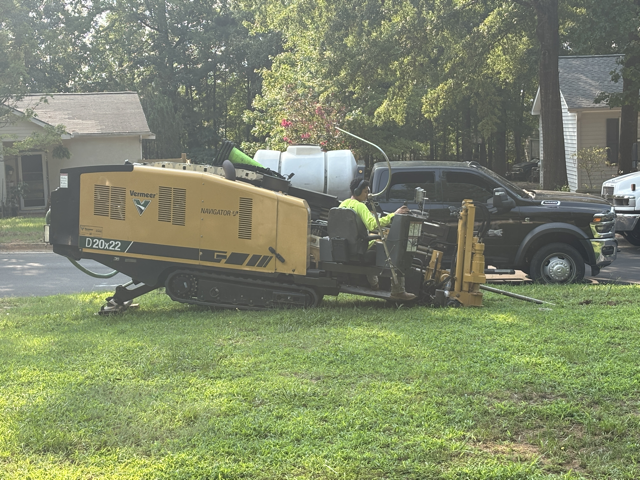
Horizontal Directional Boring
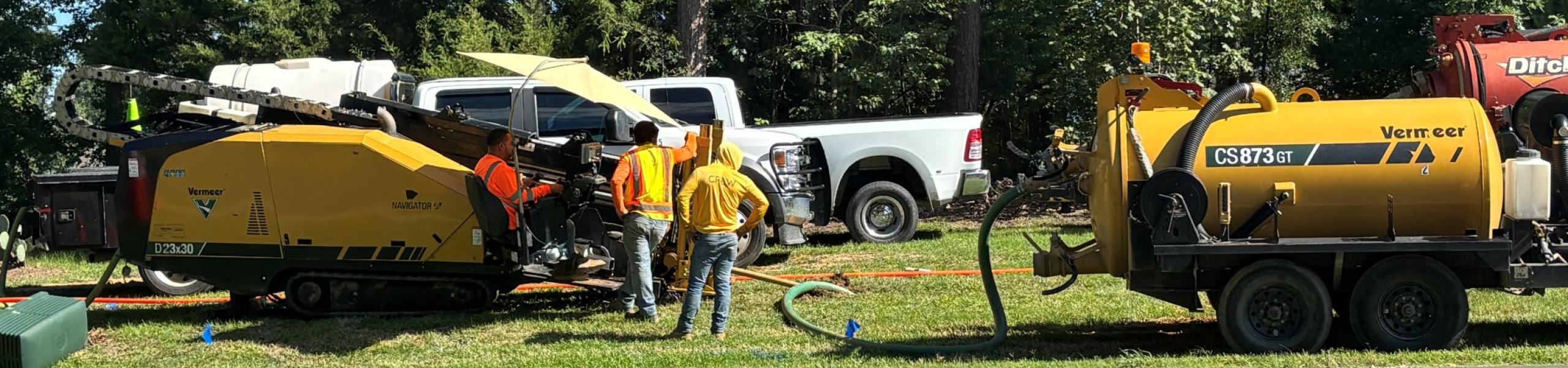
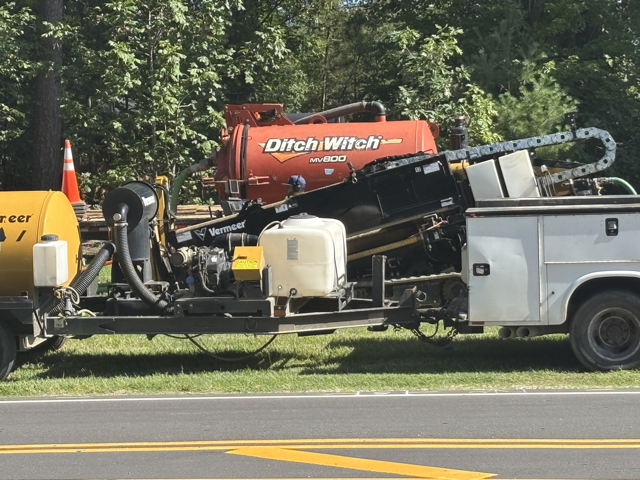
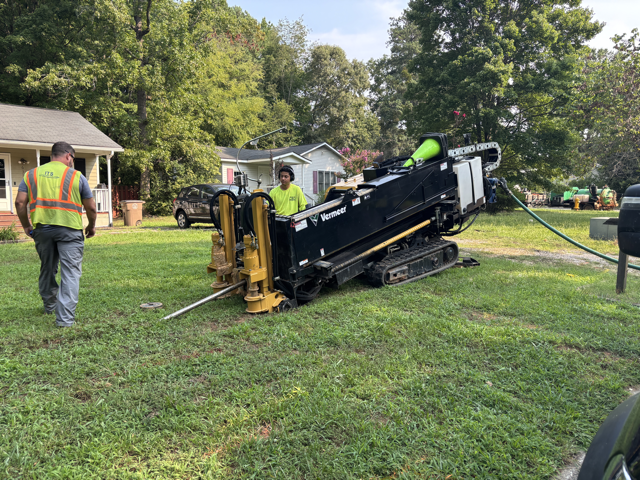
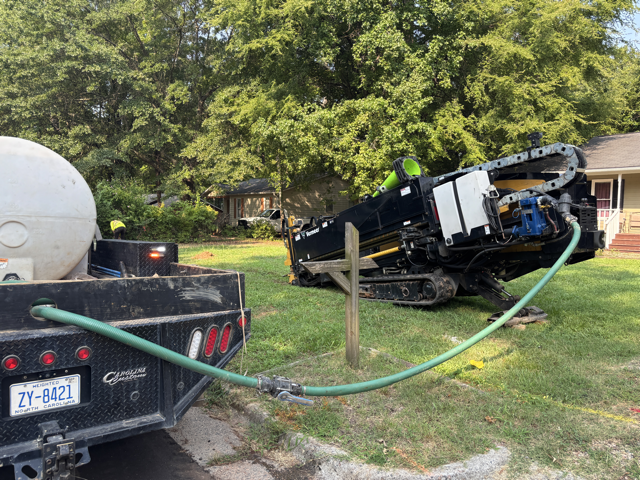
Horizontal directional boring uses specialized equipment to install underground utilities with minimal surface disruption.
This method is commonly used in constrained rights-of-way, for deeper utility installations, and when crossing beneath roadways, driveways, and other surface features.

Color-Coding Standards
Utility markings are applied in accordance with the color-coding standards established by the American Public Works Association (APWA), as shown.
Once a contractor submits a utility locate request through the 811 system, utility operators (such as gas, water, electric, telecommunications, and cable providers) have up to three business days to identify and mark the location of their underground facilities using standardized paint markings and flags.
Attention Homeowners
Homeowners who have privately installed infrastructure, such as irrigation systems located within the public right-of-way, can help reduce the risk of damage by clearly marking these facilities prior to construction activity. Flagging materials are available at most hardware stores. Homeowners may also use purple paint to indicate irrigation lines; however, no other paint colors should be used to avoid confusion with the standardized utility marking system.
Utility marking paint is temporary and typically fades within six to eight weeks, depending on weather conditions, traffic, and other environmental factors.
Under the 811 notification process, contractors are generally permitted to begin work after the three-business-day waiting period has elapsed, even if all utility facilities have not yet been marked. While contractors take precautions to avoid existing infrastructure, underground construction activities inherently involve some risk. For example, during horizontal directional boring operations, the drill head may encounter unexpected subsurface conditions, such as rock formations or other obstructions, causing it to deviate from its intended path and potentially damage existing underground facilities.
Questions/Concerns
Reporting Construction Concerns & Damages
- Brightspeed (formerly Century Link)
Shannon K. Flaherty, Government & Community Relations Manager - GFiber Support
ConEx (Construction Experience) Support Team | (877) 454-6959 / Option 3
Register Formal Complaints
- Contact the NC Attorney General's Office to register formal complaints with the state
Search
Press Escape to close this dialog.