Stormwater is precipitation that accumulates from heavy rain or snow. In undeveloped and natural landscapes, stormwater infiltrates into the ground, however, when it hits hard surfaces like pavement, sidewalks, and roofs it creates stormwater runoff.
Why do we need to control stormwater?
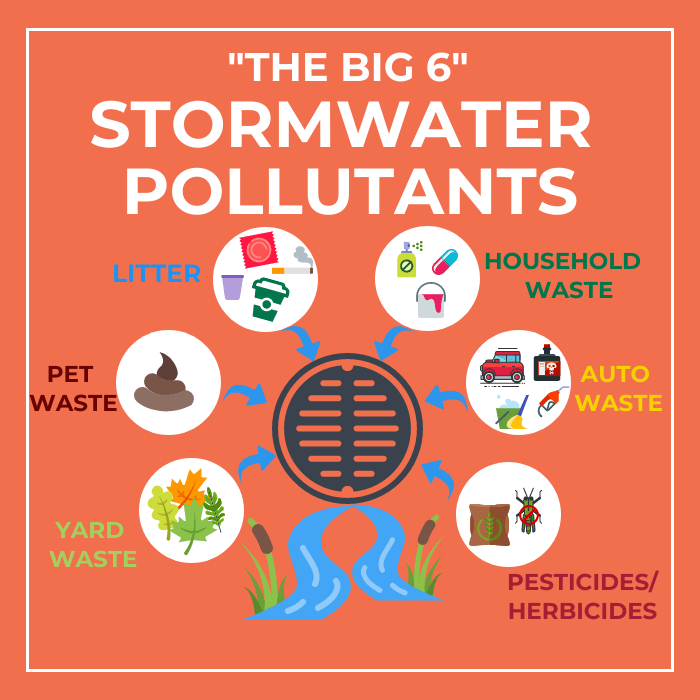
Increased impervious surface (asphalt, concrete, and rooftops) limits the amount of water that can absorb into the ground and creates high stormwater runoff volumes. This increases the amount of water that runs directly into our creeks and streams without being filtered thru the soil. Stormwater can pick up and carry many pollutants on it's path draining directly to the rivers, streams, and lakes. These pollutants include sediment, pet wastes, pesticides, fertilizers, automobile fluids (such as oil, gasoline, and antifreeze), yard wastes, cigarette butts, litter, and more. The increased volume in stormwater also creates a "flashy" condition in the creek and streams, causing them to rise very quickly. This can increase amount of stream bank erosion and stream movement to the left or right, oxbows, etc.
What is a Stormwater Control Measure (SCM)?
SCMs consists of various controls to help manage the excess runoff. Types of stormwater controls include:
Wet Detention
Dry Detention
Bioretention
Constructed Wetlands
Permeable Pavers
Underground storage and filters
You can find a full list of approved SCMs in NCDEQ's Stormwater Design Manual.
How do I know Stormwater Control Measures are functioning properly?
SCM's should drain within 72 hours. This slow release of accumulated water prevents our rivers, streams, and lakes from flash flooding. Constructed wetlands and wet detention should primarily stay wet and act as a natural system. Cattails are an invasive plant species that often develop in wet SCMs and should be maintained since they can limit the designed functionality. Most SCMs provide sediment and trash removal to keep our waterways clean. An annual inspection is required to identify and remove this trash and sediment build up. Here is a link to the Town's annual inspection report form.
If you live in a neighborhood with one or more SCMs, check with your HOA to make sure they are being properly maintained. You can reference the North Carolina Stormwater Design Manual's SCM Operations and Maintenance for more information. If you suspect a SCM near you isn't functioning properly and may be causing adverse affects to our Town's waterways, please contact our Stormwater Utility Manager, Nick Nolte at 919-435-9449. Protecting our Town's waterways is our number one priority.
How can I help?
Be aware of how your actions can impact our water quality.
Check out the Town's Waste Wizard and the Wake County website for instructions on properly disposing of hazardous house waste.
Educate yourself on the proper application of pesticides and fertilizers. You can also attend our Lawncare 101 training course hosted by the Town's Parks Maintenance Superintendent.
Follow the Town's instructions for yard waste to make sure it doesn't end up in our stormwater infrastructure.
Clean up oil/fluid spills when doing car maintenance or consider getting these things done at a shop. Try washing your car on the lawn instead of the driveway/street - or go to a car wash!
If you see anything that looks like it has potential to enter the storm drain and pollute our streams, report it to the Town Public Works Department (919-435-9570). This may include sanitary sewer overflows, dumpsters near storm drains, or hoses which outlet directly to a storm drain.
Pick up after yourself and your pets! Get involved in our Adopt-a-Stream program. By helping to keep our Town clean, you are also protecting our waterways from accumulating trash and litter.
If you have a septic system, ensure it is functioning properly. Hire a professional to inspect the system ever 1-2 years. See Wake County's website for additional information.
Looking to educate your kids about stormwater?
North Carolina Department Of Transportation has some great resources and activities for student to learn about Stormwater and Pollution Prevention. Use these links to access activity books for Litter and Stormwater which you can print out at home!